
Proposed piling works had ceased due to the presence of water voles on the bank to be impacted and a lack of habitat on the offside. The works were required due to severe leaks and the potential to impact neighbouring properties.

The Project
The Rothen Group led discussions with the Canal & River Trust ecologists to create suitable water vole habitat on the offside through installing pre planted coir rolls. This would enable the transient water voles continuity of habitat for commuting along while the works were going on and afterwards when the piles restricted bank suitability. The plants for the coir rolls were carefully chosen to provide optimal foraging and nest building habitat for the water voles. Placed on top of hazel faggots, they created a stable soft bank protection option whilst addressing the ecological constraints.
Drop piles were installed for piling works on River Nene for the Environment Agency. Where water voles were present, every 3rd pile was driven down to below water level and a pre planted coir roll placed on top. These created a series of steppingstones along the piled bank for both burrowing & foraging.
Working with a marina site set in a rural location with known populations of water voles present an aesthetically pleasing, ecologically friendly but stable bank protection option was required at the marina entrance. The Rothen Group proposed piling to water level and placing a pre planted coir roll on top. This created suitable nest building habitat along with excellent foraging areas for the water voles whilst also creating the structural stability needed at the entrance to the marina.
The Rothen Group also proposed to construct a sand martin habitat from timber & sand. Sketches were produced to outline the dimensions which would create ideal habitat for the sand martins for a site where there is no suitable bank face.
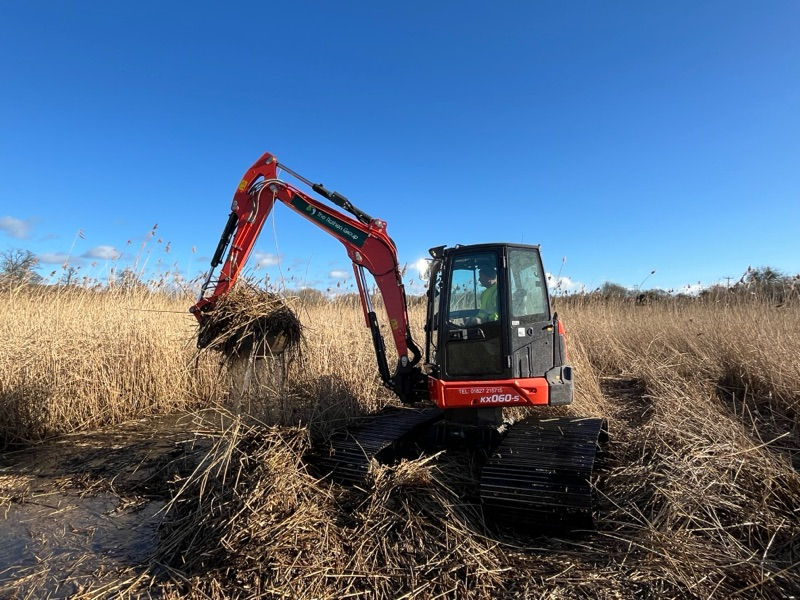
FEATURED CASE STUDY
Habitat Creation Coney Meadows, Droitwich
Coney Meadows is part of a nationwide project to restore the UK’s wetlands. Since the 17th century, large areas of reedbeds have been stripped and converted into agricultural land, massively reducing the number of habitats available for wetland animals.

FEATURED CASE STUDY
Changing the Shape of the River Derwent, Derby
Following the storm seasons of 2023 & 2024, the EA set out to review its impact on the UK’s waterways. The River Derwent in Derby was flagged after a sonar scan of its navigation identified a scour hole – a direct result of heavy rainfall pushing sediment downstream.


Our Accreditations