
Polyurethane Grouting
The process of polyurethane grouting involves injecting the product into the leak flow paths or voids, to prevent water movement into or through various structures. We inject this grout through a lance, set at different depths to ensure the grout completely fills and seals the void as opposed to just sitting on the top of a hole/crack.
Grouting
Our Specialist Polyurethane Grouting Services
The polyurethanes we use at The Rothen Group are typically single component hydrophobic resins; reacting with water, foaming and expanding, to seal leaks or fill voids.
They vary in uses, often come in a 2-part system and are available with varying viscosity, reaction times, expansion characteristics and flexibility of the reacted grout, to enable us to use them across multiple jobs and structures.
Easy to transport, the grouting equipment is ideal for awkward access and remote sites as it can be moved by hand.
The main uses of PU grouting are:
leak sealing – seal cracks and joints
create barriers to water flow
fills voids
re-level slabs/surfaces
Looking to seal a leak? Get in touch with The Rothen Group for advice, support and a free site visit.


Gallery
FEATURED CASE STUDY
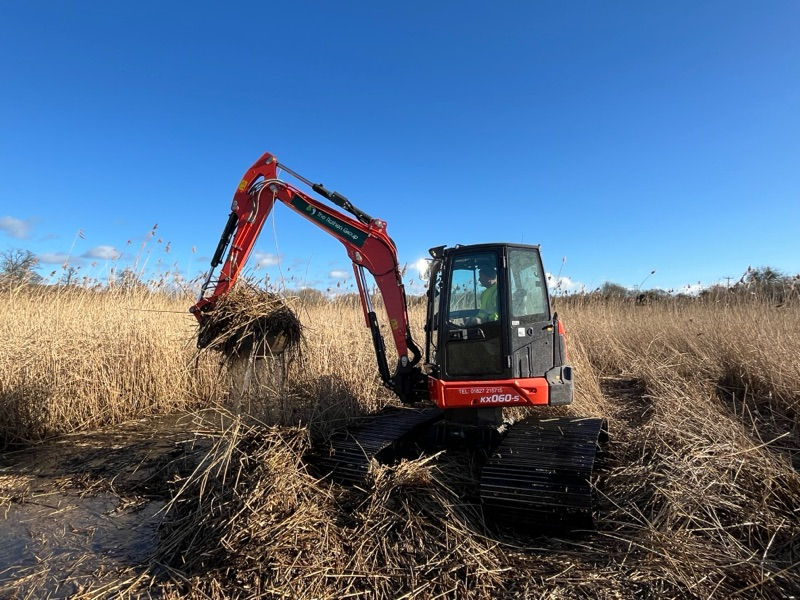
Habitat Creation Coney Meadows, Droitwich
Coney Meadows is part of a nationwide project to restore the UK’s wetlands. Since the 17th century, large areas of reedbeds have been stripped and converted into agricultural land, massively reducing the number of habitats available for wetland animals.

FEATURED CASE STUDY
Changing the Shape of the River Derwent, Derby
Following the storm seasons of 2023 & 2024, the EA set out to review its impact on the UK’s waterways. The River Derwent in Derby was flagged after a sonar scan of its navigation identified a scour hole – a direct result of heavy rainfall pushing sediment downstream.

It is a polymer based grout that forms a durable and strong waterproof material.
What is polyurethane grouting?
When applied it forms a strong waterproof bond that is flexible. Polyurethane grouting moves into cracks and crevices filling them as it is exposed to water.
How does polyurethane grouting work?
Hand held tools and plant making it is easy to get to site. You need a pump and various hoses and injection nozzles to work with polyurethane grouting.
What equipment and tools do you use when working with polyurethane grouting?
Polyurethane grouting is stronger and long lasting with better durability. Faster curing and better resistance to cracking.
What are the benefits of polyurethane injection grouting?
If not applied properly you can create weak spots and voids. Plus, it’s more environmentally harmful than cement based grout.
Are there any disadvantages of polyurethane grouting?
Quicker than cement based grout. It takes ess than 72 hours for polyurethane grouting to dry.
What’s the drying time of polyurethane grouting?
Yes, highly waterproof and is mainly used in water based applications.
Is polyurethane grout waterproof?
Depends on where the works are, whether you have cracks or voids and if they are underwater, what the longevity and structural stability needs to be.
Polyurethane grout vs cementitious grout, which should I use for my project?
FAQ
Your Questions Answered
contract services
Related services


about us
A decade of
The Rothen Group
The Rothen Group have spent decades working on the UK’s inland waterways, completing emergency and routine repairs. We’ve seen it all and understand what type of grouting material suits which projects. We also always consider the environmental impacts of our work, amongst other important factors.
From filling voids to making towpaths safe, our team brings together expert craftsmanship, specialist equipment and a deep understanding of the engineering challenges of grouting. We work closely with clients across the country, including the Canal & River Trust, to carry out safe, sustainable and heritage-sensitive repairs.


