
Habitat Restoration
Habitat restoration is fundamental for the survival of the UK’s wildlife. Restoring habitats provides essential resources and suitable conditions to ensure ecosystem stability and resilience. We deliver sustainable and practical habitat restoration projects that are completed to the highest standards. The work we help deliver starts to reverse the damage caused by supporting the balance of natural systems.
Contract services
Our specialist Habitat Restoration services
We pride ourselves on having over twenty years of nature based project delivery experience including habitat creation and habitat regeneration. Over the years we have adapted our approach with the changes to net gain and the need for creating climate resilient habitats.
Whether you have a chalk stream to restore for spawning salmonids, a new footpath to construct through native woodland or enhancement of a waterbody to improve biodiversity, we can provide bespoke design and construction solutions.
At The Rothen Group we work with Wildlife Trusts, ecological consultancies, conservation trusts, land owners and local councils. The people leading the way on ecosystem conservation, who are looking to restore and protect their local ecosystems. Whether your habitat restoration project is small or on a large scale we can advise on the best methods for enhancing wildlife habitats to suit your cost and time requirements.
Our habitat management team includes CIEEM accredited ecologists, natural designers and specialist operators with additional ecological and environmental training all led by a living landscapes Project Manager. The expertise covers a range of habitats and species including both land and aquatic restoration projects.
Looking to restore a habit? Get in touch with The Rothen Group for advice, support and a free site visit.

Dredging
View More

Lock
maintenance
View More
Lock
maintenance
View More
Dredging
View More
Dredging
View More
Lock
maintenance
View More
Lock
maintenance
View More
Dredging
View More


Gallery
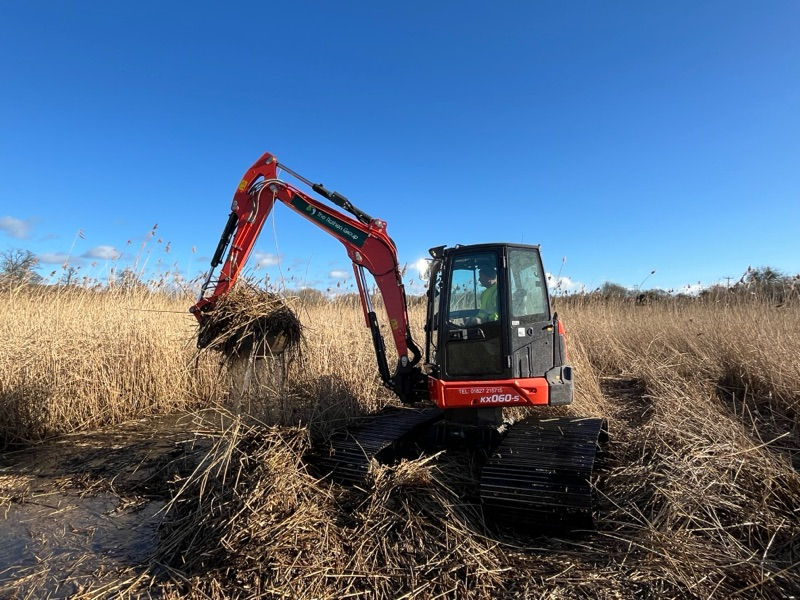
FEATURED CASE STUDY
Habitat Creation Coney Meadows, Droitwich
Coney Meadows is part of a nationwide project to restore the UK’s wetlands. Since the 17th century, large areas of reedbeds have been stripped and converted into agricultural land, massively reducing the number of habitats available for wetland animals.

FEATURED CASE STUDY
Changing the Shape of the River Derwent, Derby
Following the storm seasons of 2023 & 2024, the EA set out to review its impact on the UK’s waterways. The River Derwent in Derby was flagged after a sonar scan of its navigation identified a scour hole – a direct result of heavy rainfall pushing sediment downstream.

Any! We have the plant, people and expertise to undertake land and aquatic based projects. Our habitat restoration projects range from woodlands and wildflower meadow to wetland creation and canals.
What habitats can you restore?
Achieving a mosaic of natural habitats is critical for ensuring a wide range of species have their niche environment to thrive. The same habitat or poor habitat management results in only a few species being able to succeed. Through careful enhancement to create a range of different micro climates you in turn support a much broader spectrum of wildlife, therefore improving overall biodiversity.
Why is restoring natural habitats crucial for maintaining biodiversity?
Yes, absolutely. We have several ways of reintroducing native plans into restoration sites, so get in touch to find out how.
Can you reintroduce native plant species in restoration sites?
It depends on the type of habitat, the condition of the habitat before you enhanced it and what type of habitat you are looking to achieve. Some restoration projects can take tens of years, but others, particularly wetland restoration projects can recover quickly.
How long does it take for a restored habitat to become ecologically self-sustaining?
The main objectives of any habitat restoration plan are to restore biodiversity, ecological function and resilience to a previously degraded habitat. Biodiversity encompasses having a wide range of native species and plants that live in balance.
Ecological function should include the wider cycle of how a particular habitat exists in its environment. For example the wider cycle includes water, air, nutrient cycling, floor control and forming soil.
Habitat and ecological resilience is in essence creating a balanced ecosystem that can cope with changes to our climate and form an in-built resilience to environmental stressors.
What are the main objectives of a comprehensive habitat restoration plan?
We measure success through surveying particular key species and plants both in terms of numbers, breeding potential and coverage of an area.
Through monitoring water, carbon, soil and air data to see if it is becoming cleaner, deeper, richer etc. We can see that our habitat restoration project is having a positive effect. Modelling of water storage within habitats or flow rate on rivers as well as depth and type of soil structure or pollutant levels in the air., also tell us how successful a project has been.
How do you measure the success of a habitat restoration project?
FAQ
Your questions answered


Our Accreditations
about us
A decade of
The Rothen Group
The Rothen Group values loyalty, expertise, trust and energy which are embedded within our habitat restoration team . These can be used to summarise how we feel about being involved in these special projects. Loyalty to living landscapes and restoring our habitats is fundamental to any habitat conservation project. We share expertise with our clients to help them design, plan and implement the best habitat solution for their budget and time constraints.
Trust that we do what we say we will; delivering a high quality restoration project with the best health & safety, environmental and innovative policies met. Energy in our drive and determination to overcome the challenges many of these habitats face in reestablishing better ecological resilience and improved biodiversity.
