Blue Green Algae Guide: Risks, Identification, and Prevention

Updated: Sep 22
Walk near your local river or canal, and you might see signs warning about blue-green algae in the water. As the weather gets warmer, canals, rivers, and reservoirs can become breeding grounds for this microscopic creature. This can be dangerous for both people and animals.
Unfortunately, most people don’t know what blue-green algae looks like, why it’s harmful, or what they can do to safeguard themselves and their pets. Below, we explain everything you need to know about blue-green algae, so you’re ready during the next bloom period.
In this article we'll explore:
What is Blue-Green Algae?
Blue-green algae, or BGA, is not actually algae. It’s a cyanobacteria (literally blue bacteria) that looks and acts a lot like algae, hence the confusion.
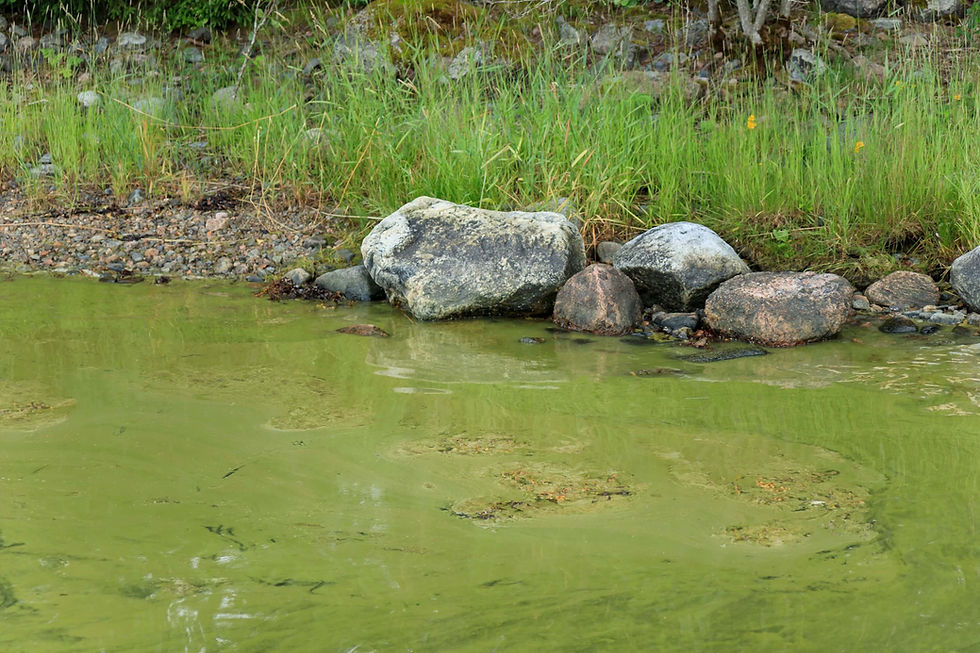
Under the right conditions, the BGA will “bloom,” rapidly proliferating. You can easily spot it as green mats on the surface of the water.
What Causes Blue-Green Algae?
Blue-green algae are naturally found in most water bodies. In small numbers, they’re not harmful. However, when the water is shallow, warm, and undisturbed, it can become a breeding ground for the microscopic creatures, especially if there’s a steady supply of nutrients.
That’s what makes canals, rivers, and reservoirs such a problem. They often have all three conditions during the summer months.
When Does it Appear?
Under favourable conditions, blue-green algae can multiply rapidly, allowing blooms to develop over days or weeks. Usually, numbers start to increase in the spring and summer due to the run-off fertiliser from surrounding fields or upstream. That fertiliser acts as a sudden rush of nutrients, creating the conditions for runaway growth.
You may notice a particular river or section of canal gradually accumulates this green matting or becomes discoloured at the same time every year, reaching its peak in July-August. Then, during the autumn and winter weather, the lack of light causes the algae to die and decompose.
How to Identify a Harmful Algal Bloom (HAB)
The "Spilled Paint" and "Pea Soup" Visual Cues
The most obvious sign is the colour of the water. The water becomes less clear, often with a green, blue-green, or greenish-brown tint. If the algae bloom is especially bad, it may form green mats on the surface of the water.
Dead Fish and Foaming Shorelines
When the cyanobacteria form mats, they block out light from entering the water. It also consumes a lot of oxygen. That can kill off any fish living in the section of water. You may also notice foaming on the shore.
Why Cyanotoxins are Dangerous
The main danger of blue-green algae comes from the toxins some cyanobacteria produce. Known as cyanotoxins, these chemicals can affect the liver, nervous system, and skin. Not every bloom is toxic, but it is impossible to tell just by looking at the water, which is why all blooms should be treated with caution.
Symptoms in Humans
Most people only experience mild symptoms after contact with contaminated water. These can include:
Skin irritation or rashes
Red, sore eyes
Nausea, vomiting, or diarrhoea
Headaches
Flu-like symptoms
Anyone who feels unwell after exposure should seek medical advice.
Why Dogs are Most at Risk
Dogs are particularly vulnerable because they often swim in affected water, drink from rivers and canals, or lick contaminated fur after leaving the water.
Symptoms can appear quickly and may include:
Excessive drooling
Vomiting and diarrhoea
Weakness or collapse
Tremors or seizures
Blue-green algae poisoning can be fatal in dogs, so immediate veterinary attention is essential if exposure is suspected.
Current Treatment and Prevention Methods
There is no single solution for blue-algae blooms. Often, local authorities or private owners will put up a sign warning visitors and will allow the algae to naturally die off during the cooler months.
Biochar Filtration and Nutrient Stripping
Biochar is a charcoal-like material produced from organic matter. If placed into ponds, reservoirs, and treatment systems, it absorbs nutrients (particularly phosphorus), depriving cyanobacteria of a vital ingredient for growth.
It’s best used as a preventative measure rather than a cure once a major bloom has developed. You’ll often find it used in sustainable water treatment programmes.
Ultrasound and Algaecide Solutions
Ultrasound waves can disrupt cyanobacteria cells. It helps prevent the algae from floating to the surface and forming dense mats. While it won’t get rid of the algae entirely, it can stop the algae from killing off other species.
Algaecides are chemicals designed to kill algae. It’s generally considered a last option for severe blooms, as the algae can release toxins into the water when they die.
What to Do if You Spot a Bloom
If you think you’ve identified an algae bloom, the most important thing is to keep yourself and your pets away from the water. You might also want to contact your local authority about the bloom to help warn other people.
The Impact of Climate Change on Algae
Climate change can lead to rising summer temperatures and heavier rainfall incidents. More rain means more land run-off, providing extra nutrients for the algae. Together, these effects of climate change can make algae blooms more severe, especially during the summer and autumn months.
Protecting Waterways from Blue-Green Algae
Blue-green algae can pose a serious risk to people, pets, and wildlife. Fortunately, by recognising the signs of a bloom and acting quickly, you can reduce the risk of exposure and limit its impact.
Need support managing water quality? The Rothen Group provides specialist environmental and water management solutions to help organisations maintain healthier, safer waterways. Contact our team today to discuss your requirements.

Frequently Asked Questions
Can I tell if blue-green algae are toxic just by looking at them?
No. There’s no way to tell toxic from non-toxic BGA at a glance. That's why it's important to be cautious around any water with high levels of BGA.
What are the symptoms of blue-green algae poisoning in dogs?
If your dog is exposed to BGA, you may notice excessive drooling, vomiting and diarrhoea, weakness or collapse, or tremors or seizures. Blue-green algae can be fatal in dogs, so immediate veterinary care is advised.
How do I treat a pond with blue-green algae?
Depending on whether there are any fish in the pond, you can consider either biochar, ultrasound, or algaecide. Algaecide is the quickest solution, but it can harm fish species. Alternatively, identify the source of excess nutrients to prevent future blooms.


Comments